Mitosis is an important step for division in a plant cell. Cytokinesis completes the division process by allowing a plant’s parent and daughter cell to separate and continue the reproduction process.
Background of Mitosis
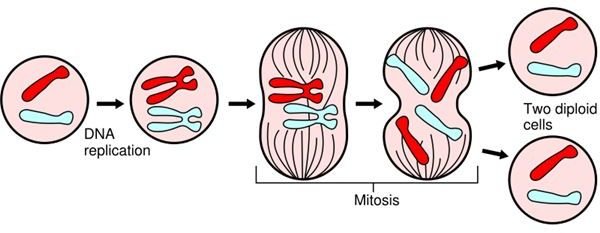
Mitosis is the process that allows plant cells to copy their genetic material and pass it to new daughter cells. Leading up to mitosis is a stage called interphase. Interphase is simply a cell’s “resting zone” in which in prepares the process for division. For example, it has three stages called G1, S, and G2.
The most important things that happen in interphase are that the plant cell enlarges to get ready for division and the chromosomes become replicated to begin the next phase.
Starting mitosis is the first stage called prophase. Prophase allows the chromatids (future chromosomes) to start breaking away and allows other organelles (such as the nuclear membrane) to dissolve and start the division process. Next is metaphase, in which the chromatid turned chromosomes line up across the equator of the cell forming a metaphase plate.
Following this is anaphase, in which a plant cell’s spindles drag the chromosomes to opposite ends of the cell. This is important because it allows the genetic material to be passed to the new daughter cell while also keeping genetic material for the parent cell.
The last phase is called telophase. Telophase is almost the opposite of prophase, in which the chromosomes begin to revert back into chromatids and the nuclear envelope begins to redevelop. It is here where plant cell cytokinesis takes place that further divides the cell into two.
Cytokinesis in Plants
Plant cell cytokinesis is the last step in telophase that plants use in dividing parent and daughter cells. Unlike animal cells, which divide
with a cleavage furrow and who have centromeres, plants split differently. This is accomplished through the use of cell walls.
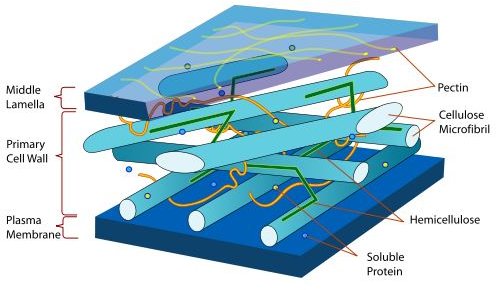
Plants create cell walls along the metaphase plate to separate from each other. How are the cell walls constructed? This is credited to the Golgi apparatus which sends vesicles (think of air bubbles) which move to the center of the cell (near the metaphase plate).
It is here where they combine to form a cell plate and later develop into the cell walls. Once the cell walls are completed, the parent and daughter cells are able to separate from the cytoplasm and complete the process. Similar to binary fission in prokaryotes, plant cells rely on these cell walls to complete the process in cytokinesis.
Once cytokinesis and telophase is completed, the parent cell successfully donates its genetic material to the new daughter cell. It is interesting to see how the process can be completed in a short manner compared to the long process of interphase. After going through interphase, the new daughter cell is ready to reproduce which starts the process all over again.
References
Sources:
- Korgh, David. “Information to Genetics: Mitosis and Cytokinesis.” https://wps.prenhall.com/esm _krogh_biology_3/17/4437/1135980.cw/index.html
- Muller, Michael. “Cell Division.” https://www.uic.edu/classes/bios/bios100/lecturesf04am/lect16.htm
Images:
- LadyofHats. “Plant Cell Wall Diagram.” https://commons.wikimedia.org/wiki/File:Plant _cell_wall_diagram.svg
- Mysid. “Major Events in Mitosis.” https://commons.wikimedia.org/wiki/File:Major _events_in_mitosis.svg
This post is part of the series: All About Cytokinesis
Need to know all about cytokinesis? Learn about the the process of cytokinesis as well as how it works in animal and plant cells.