If you’re wondering how homeschooled students do with socialization, academic achievement and college success compared to traditionally schooled children, read on! Research reveals the answers to these questions in this article.
What do Research Studies Show About Home Schooled Children?
According to the Home School Legal Defense Association each year 100,000 students are graduating from a home education, and homeschooling is growing at a rate of 7% per year. There is a growing tend to educate at home, and many wonder how homeschooled children compare to their traditionally schooled counterparts. While research on homeschooled students has been sparse, more studies are being done as it grows in popularity, proving the benefits of a home education. The following studies show how homeschooled children fare with academics, socialization, and college.
How do Homeschooled Children Score Academically?
Two major studies were conducted in the last fifteen years concerning homeschooling students and academic achievement. In 1998 Dr. Lawrence Rudner, a professor at ERIC Clearinghouse, a part of the University of Maryland, surveyed over 20,000 students and titled his findings, “Home Schooling Works.” What Rudner found was that home schooled students scored, on average, thirty percentile points higher than the national average on standardized achievement tests. Critics said that it was not an accurate representation because of the control group. The study was done on 20,760 homeschooled students who agreed to take the Iowa Basic Skills Test, but all of the students were educated using Bob Jones Curriculum, and not all the students that signed up to take the test (40,000) allowed their scores to be used by Rudner [1].
More recently, in 2009, Dr. Brian Ray of the National Home Education Research Institute published the largest homeschool study to date on academic achievement and the demographics of homeschooling families. Unlike Rudner’s study, Dr. Ray drew from 15 independent testing services and surveyed 11,739 homeschoolers from all 50 states. The students took three well known tests , the California Achievement Test, the Iowa Tests of Basic Skills, and the Stanford Achievement Test for 2007-2008.[2] The national public school average is taken as 50%, the following scores are the homeschool average as a result from these tests. These scores verify the findings from Rudner’s study, as they indicate that homeschooling students are testing 30 percentile points higher in all core subject areas.
Homeschooling Students Average Test Scores Based On Dr. Ray’s Research:
Reading 89
Language 84
Math 84
Science 86
Social Studies 84
Corea 88
Composite b 86
a. composite of Reading, Language, Math
b. Combination of all subtests the students took on the test
What Does Research Show about Home Schooled Children and Socialization?

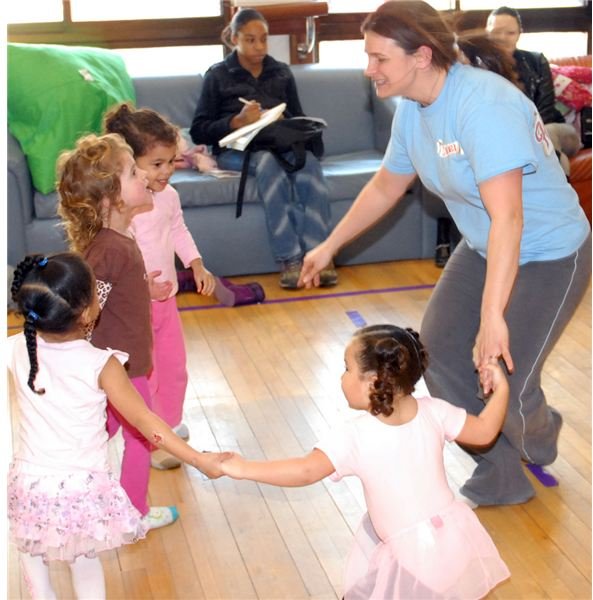
A major concern from critics of homeschooling is, “How do they fare socially in comparison with traditionally schooled children of the same age?” Two studies show that homeschooled children have healthy self concepts and interact well with others. In 1986 J.W. Taylor wrote a Doctoral Dissertation titled “Self Concept in Home Schooled Children.” He found that homeschooled children were more socially mature than public school peers the same age. [3]
The other study commissioned by Discovery Institute used videos of mixed groups of children playing to test social skills. These videos were viewed by counselors, who did not know which children were homeschooled and which were traditionally schooled. The conclusion, based on counselors’ observations, was that the homeschooled children had less behavioral problems than their counterparts.[4]
Can Homeschool Students Get into College and Succeed?
Studies on homeschool children also show that they can get into college, adjust and succeed. One study done in 2004 by Dr. Paul Jones and Dr. Gene Gloeckner shows that homeschoolers do as well as their counterparts on college prep exams and in the first year of college with their grade point averages. These researchers found no statistical difference in nine areas of measuring college preparedness when studying traditionally schooled students and homeschoolers side by side.[5] More research shows that homeschooled students have gained admission to over 1,000 United States colleges and universities.[6] Also, Dr. Ray’s 2009 study, referenced above, showed that 74% of the homeschooled adults he surveyed had taken college level courses.
Conclusions on the Research
Overall, studies are showing that homeschooling children are performing well academically, succeeding socially, gaining entrance to college and doing well once there. These studies continue to educate the public that homeschooled children are able to adapt and succeed in the environments they are placed in.
Article References:
1. Oplinger and Willard, “Claims of Academic Success Rely on Anecdote, Flawed Data Analysis,” Akron Beacon Journal, Nov. 15, 2004
2. www.stanford.edu/group/reichresearch
3. Taylor, John W., “_Self Concept In Home Schooled Childre_n,” 1986, Andrews University, Berrien Springs, MI
4. Lines, Dr. Patricia, https://www.discovery.org/a/1068
5. Jones and Gloeckner, “The Journal Of College Admissions” pp.17-20, Vol. 183 (Spring 2004) https://www.nheri.org/
6. ERIC Digest 151 , Dr. Patricia Lines, “Homeschooling,” September 2001
Girls Smiling Image: Wikimedia Commons,freundinnen.jpg; author: Benjamin Gimmel
Old books Image: Wikimedia Commons, old book-Les Miserables.jpg, author: Ryan Franklin
This post is part of the series: Studies on Homeschooling
The articles presented here highlight what research shows about homeschooling children in the areas of academic achievement, socialization, and college preparation. General demographics of homeschooling families are also discussed here.