Your classroom will contain students that require instruction geared toward all three major learning modalities. One of the most challenging tasks for any teacher involves serving all three types – often simultaneously.
Learning Modalities
For most of the history of education, students were expected to adapt to the instructional style of their teachers, who did not adjust their teaching for different learning modalities. Often, this meant listening to lengthy lectures while making notes, or following written notes on a blackboard and, later, projected onto an overhead screen.
Many research studies in the twentieth century agreed that there are three different learning modalities: visual, auditory and kinesthetic. Visual learners do best when reading or seeing instructional material; auditory learners thrive when they hear their lessons; kinesthetic learners get the most out of hands-on activities.
Visual Learners
Sitting in a lecture hall for 90 minutes at a time is a frustrating experience for learners whose primary learning modality involves the visual. They would rather read books or articles about the material than listen to a lecture about it, while either plugged into their MP3 players or sitting quietly while they assimilate the material.
If you’re a teacher of visual students, and you’re going to be lecturing, they will get more out of your presentation if you include an outline that they can follow, as well as any applicable illustrations or diagrams. If you are using a PowerPoint presentation, providing your students with a printed copy with areas to make notes will help them digest the information even more readily.
When it comes to student products, give visual students such options as video production, diagrams and posters in addition to written responses.
Auditory Learners
One of the easiest learning modalities for teachers relates to the auditory learner. If your lecture or presentation has been designed to suit your students’ educational abilities, your auditory learners will follow along and absorb the information. It is worth noting that, in the twenty-first century, given the multisensory stimuli that children start receiving at such a young age, you will need to provide some visual stimuli to keep the interest of your auditory students. If you’re already making your lessons accessible to all modalities, though, this shouldn’t be a problem.
For projects, give auditory learners the ability to make audio products. Software packages like PowerPoint and Audacity and presentation websites like Glogster give students the ability to embed a variety of video and audio files into their final products.
Kinesthetic Learners
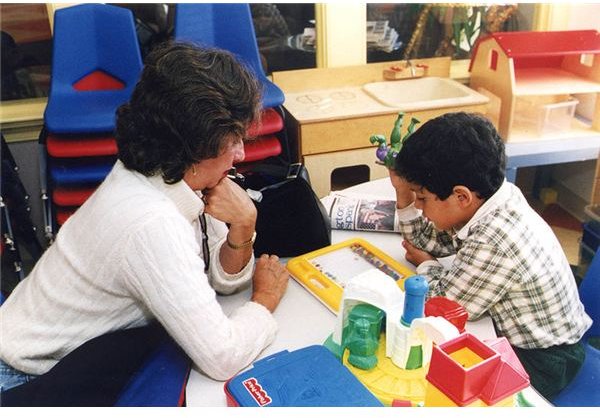
The least common of the learning modalities is the kinesthetic, or tactile. These students generally get very little from reading, and they start to twiddle their thumbs minutes into even the most dynamic presentations. The reason for this is that they learn best while doing – not while sitting in a classroom.
While this learning style might be easy to accommodate in a robotics class or a sculpture class, it’s harder to do in language arts and other core classrooms. Ideas like having students assemble a simple Lego project and then write down each step for another group to attempt is one way to communicate the writing process for kinesthetic learners.
External References
Image credit: Wikimedia Commons