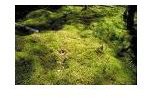
You have probably seen plenty of moss growing around your home or school. They especially like shady, damp places. Mosses are a type of non-vascular plant that differ from vascular plants in a lot of ways.
Non-vascular plants are the most simple plants found on land. The category of non-vascular plants includes Bryophyta; which includes mosses, hornworts and liverworts. They are the successor of green algae division of plants. Below are some more characteristics of non-vascular plants.
Absence of Vascular Tissues
One of the most important characteristics of non-vascular plants is the absence of vascular tissues. Non-vascular plants do not have the vascular tissues known as xylem and phloem. They do not have an internal water transport system which is found in vascular plants. Though these non-vascular plants do have stem-like and leaf-like structure, they lack true roots, stems or leaves. As they do not have any vascular tissue, they cannot retain water for long time or transport it to other parts of the plant.
Habitat
Moss can be seen on moist places such as bogs and swamps as they absorb water from their surroundings. Like all plants, they need water to survive and they have to absorb it directly from the surrounding air or any other nearby resource. They distribute water to other parts by using slow means such as capillary action, diffusion and cytoplasmic streaming.
Size
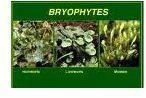
Non-vascular plants are always small in size. As they lack the woody tissues that are required to support a plant on land they can only reach a height of a few centimeters. Moreover, they cannot transport water and food very far due to lack of vascular tissues. They transfer water, organic food and minerals from environment to the interior of gametophyte through cell to cell osmosis.
Reproduction in Nonvascular Plants
All plants need to reproduce in order to expand their species, but non-vascular plants do not produce flowers or seeds. Non-vascular plants can reproduce sexually and asexually, though asexual reproduction is not a very common method.
During asexual reproduction, plant material gets regenerated when any part of the plant such as leaves fall to the ground. This results in growth of secondary plants.
During sexual reproduction, the archegonia, present on female gametophytes on the top leaves of mosses, produce egg cells. The sperm cells are produced by Antheridia, present on the male gametophytes. The sperm cells require water such as a dew or rain drop to reach archegonium where they fertilize the egg cells. The resulting zygote develops into a sporophyte that is inside the archegonium. Gradually, it takes the shape of a slender stalk with a spore capsule on its tip. In this capsule, haploid spores are produced by the process of meiosis. This capsule opens up to free up the spores. These spores get buried in soil and produce gametophytes.
Obtaining Energy
Like other plants, nonvascular plants also gain energy by the process of photosynthesis. This process takes place in the upper parts of these plants in leaf like and stem like appendages.
Remember
Non-Vascular plants:
-
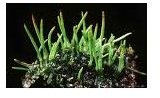
Do not produce seeds, flowers or fruits
-
Do not have the vascular tissues, xylem and phloem
-
Have multi-celled and cell walls composed of cellulose
-
Do not have true roots, stems and leaves.
-
Depend on water for reproduction.
-
Smaller in size.
-
Live in Dark and damp places.
-
Transport water and other nutrients through cell to cell osmosis
References
- Images: wildlandsleague.org, cfkeep.org, picsdigger.com
- NonVascular Plants: http://www.cartage.org.lb/en/themes/sciences/botanicalsciences/classificationplants/cryptogamia/bryophyta/nonvascular/nonvascular.htm