You might think that water always boils at 212° F (100° C), but that’s not the case. Learn about the relationship between water boiling point vs. altitude. This article provides helpful formulas to help you better understand the boiling point of water.
Water is one of the most important substances in the world since it covers the majority of the Earth. In addition, water is also essential to human life and happiness. The central importance of water to humanity, plants and animals has prompted scientists to study its properties deeply and carefully. As a result of study and experimentation, science can tell us a great deal about water such as its chemical composition, role in human biology, distribution and states.
One of the most important water discoveries was the relationship between altitude and water’s boiling point. Higher altitudes have lower pressure, and it is this lower pressure that ultimately changes water’s boiling point.
The Impact of Altitude On Water’s Boiling Point: Examples
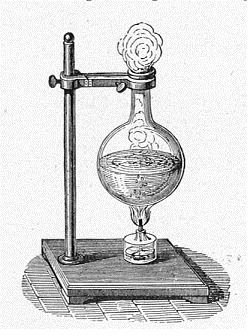
Some may assume that water always boils at about 212° Fahrenheit (or 100° Celsius). Indeed, the Celsius temperature system was constructed based on water’s freezing point (0° Celsius) and water’s boiling point (100° Celsius). However, elevation or altitude has a predictable effect on water’s boiling temperature.
Generally speaking, the higher the altitude, the lower the boiling point of water. Here are some boiling point elevation examples using locations around the United States and the rest of the world. These examples assume a relatively pure sample of water. If salt or other substances are present, the boiling point of water will change.
General Boiling Point Elevation Examples (0-1000 feet above sea level):
-
Sea level (0 feet elevation): 212° Fahrenheit (100° C)
-
100 feet above sea level: 211.8° Fahrenheit (99.9° C)
-
500 feet above sea level: 211.1° Fahrenheit (99.5° C)
-
1000 feet above sea level: 210.2° Fahrenheit (99.01° C)
Advertisement
American Cities
These boiling point elevation examples from cities across America, shows how different parts of the country have different boiling points due to their elevation. Since elevation within each city varies, these figures are mainly based on the elevation of the city’s airport.
-
Albuquerque, New Mexico (5,352 feet): 202.3° Fahrenheit (94.6° C)
-
Denver, Colorado (5,280 feet): 202.4° Fahrenheit (94.6° C)
-
Minneapolis, Minnesota (841 feet): 210.5° Fahrenheit (99.1° C)
-
Birmingham, Alabama (644 feet): 210.8° Fahrenheit (99.3° C)
-
Detroit, Michigan (639 feet): 210.8° Fahrenheit (99.3° C)
-
Miami, Florida (11 feet): 211.9° Fahrenheit (99.99° C)
American and International Landmarks:
Although it would be quite difficult to actually boil water at the top of these buildings, these examples of boiling point elevations are fun to consider.
-
Burj Khalifa, Dubai (2717 feet): 207.1° Fahrenheit (97.2° C)
-
CN Tower, Toronto (1815 feet): 208.7° Fahrenheit (98.2° C)
-
Willis Tower, Chicago (previously known as the Sear Tower, 1451 feet): 209.4° Fahrenheit (98.5° C)
-
Empire State Building, New York (1250 feet): 209.7° Fahrenheit (98.7° C)
References
To learn more about the science behind the relationship between water boiling point vs altitude, consult these resources.
- Boiling Point Elevation (Clackamas Community College), https://dl.clackamas.edu/ch105-03/boiling.htm
- Under Pressure: Boiling Water Experiment, https://astro.uchicago.edu/cara/southpole.edu/boil.html
- Image Credit: Wikimedia Commons/Andy Dingley