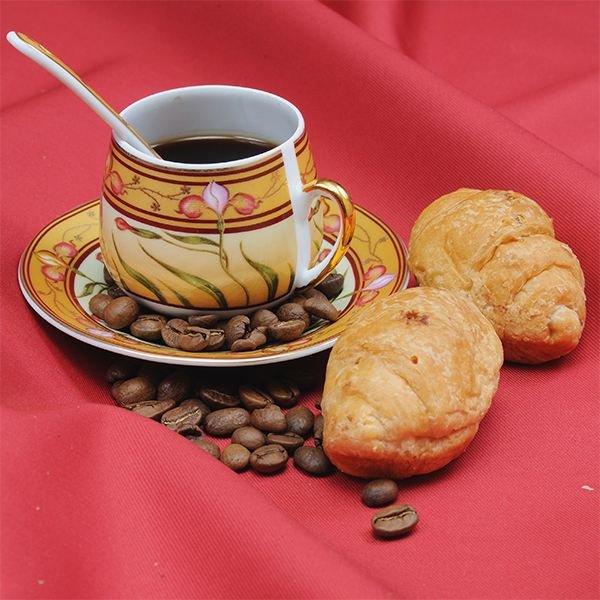
It’s not too complicated to talk about food in French once you learn the necessary vocabulary and grammar. I’ll cover the basics below to help you out.
Mmm… French Cuisine
When it comes to French culture surrounding food, one thing that will probably never go away is the idea that a meal with family and friends is still very much a social event, and it’s got to happen as often as possible. And there’ll probably always be bread! As the world gets more modern and people get busier, though, daily life has forced eating habits to change in some ways.
Getting the family together for a regular meal is still a must for many families. It just may not be when it used to be…
Traditionally, in France, lunch was the largest and longest meal of the day, and just about everyone left work or school to go home for a lunch “en famille.” This was a time for eating, relaxing, socializing and getting ready to head back to work! Businesses even closed up for a couple of hours. Now, not as many people can get home for lunch, and some choose to continue working so they can get home earlier at the end of the day. This would make dinner the more important meal for them.
“Le fast food” and prepared/frozen meals have also become a part of modern life in France. And it’s not just “MacDo,” but French chains, as well. It doesn’t seem to be as much of a choice as in the States, but it’s there.
Now, here’s some of what you need to talk about food.
I. The Partitive Article
The partitive article is used a lot for talking about food. It’s the combination of the preposition “de” with the definite articles “le (l’), la (l’), les.” The partitive article is for an unknown amount or quantity, sometimes translated as “some.”
Its important to remember that de+le=du and de+les=des, but you don’t combine de+l’ or de+la.
Je voudrais du café. I would like (some) coffee.
Il veut de la crème. He wants (some) cream.
Roger veut des croissants. Roger wants (some) croissants.
This doesn’t mean you can’t use anything else. For example, to be more specific, if you’d like “the milk,” you can ask for “le lait.” Or, if you want two of something, you would use the number (deux croissants) instead of the definite or partitive article.
II. Expressions of Quantity
Apart from the partitive article, you may want to also learn expressions of quantity. The important thing to remember is that you use the preposition “de” after them (or d’ if going into a vowel/vowel sound).
Je voudrais une tasse de thé. I would like a cup of tea.
Il a une bouteille d’eau. He has a bottle of water.
Marc va boire un peu de café. Mark is going to drink a little coffee.
III. Likes and Dislikes
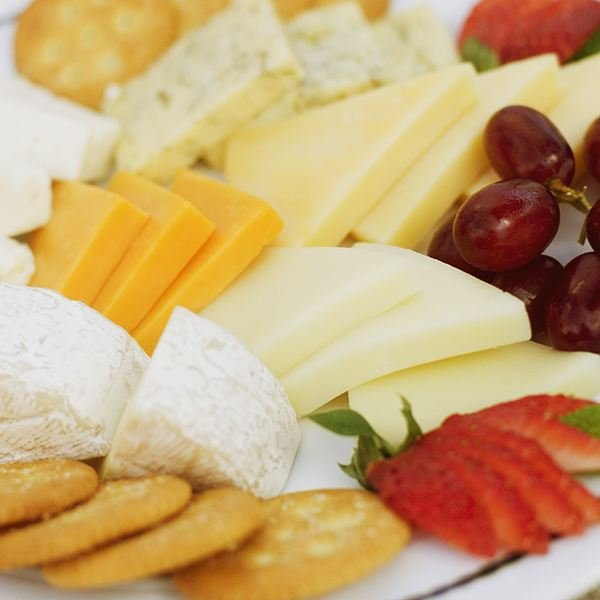
The French use the definite articles (le (l’), la (l’), les) for general likes and dislikes, where we drop them in English. Remember, here we’re speaking about liking something in general, as in “pasta” or “cheese.” In more specific cases, the definite article can translate as “the.” (Sophie doesn’t like the cheese that Mark bought.)
J’aime la pizza/le fromage. I like pizza/cheese.
Marie adore les pâtes. Marie loves pasta.
Marc déteste les oignons. Mark hates onions.
IV. Vocabulary for Food
Obviously, you’ll need to learn all the basic vocabulary for talking about food, and it may take some time—especially all the different fruits, vegetables, meats, breads, condiments, drinks, preparations… Start with what you like and don’t like, with your own personal experience, then branch out from there, so it’s not so overwhelming.
If you have allergies, you should definitely learn everything you need to know about that in French (Je suis allergique aux noix. (I’m allergic to nuts.) Je ne peux pas manger de gluten. (I can’t eat gluten.)) and so on. You often use the preposition “à” plus the definite articles (le, la, les) with allergies.
When it comes to French cuisine (la cuisine française), some classics will never go away, so you’ll probably learn vocabulary for French dishes that have been around since forever!
One key to knowing about French cooking is to learn what all the preparation names mean. For example, “bourguignon” usually means a wine sauce—typically a Burgundy or other type of red wine. Also, a classic “Salade Niçoise” will have certain ingredients in it that you won’t find in all salads. Some of the travel phrase books you’ll see have a nice food section to help you with all that—especially French menus!
A. La Nourriture/Food
Some examples:
1. manger: to eat // avoir faim = to be hungry. J’ai faim. Vous avez faim ? // grignoter = to snack in-between meals
2. les repas (m): le petit déjeuner, le déjeuner, le dîner // Québec : le déjeuner, le dîner, le souper // un apéritif (cocktail), l’entrée (o)(appetizer), le plat principal (main dish), le dessert, un digestif (after dinner drink) // le goûter (snack) // la cuisine (cooking, kitchen), la salle à manger (dining room), un café, un restaurant
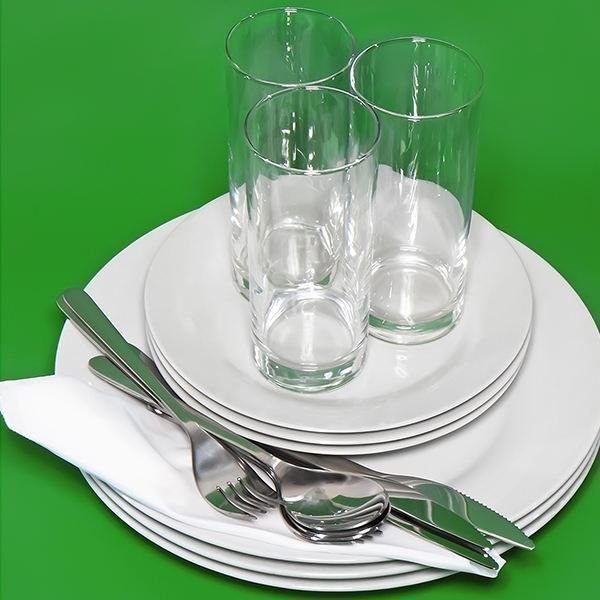
3. la table: mettre la table (to set the table), la fourchette (fork), la cuillère (spoon), le couteau (knife), un verre (glass), une tasse (cup), un bol, une assiette (plate), une serviette [de table] (napkin), une nappe (tablecloth), un napperon (place mat) // faire la vaisselle (to do the dishes)
B. Fruits & Vegetables
Some examples:
1. les fruits (m): une pomme (apple), une orange, une banane, une poire (pear), une cerise (cherry), une fraise (strawberry), une prune (plum), une pastèque (watermelon), une pêche (peach), une myrtille (blueberry), un ananas (pineapple), un pamplemousse (grapefruit), un abricot (apricot), un citron (lemon), un citron vert (lime), un raisin (grape) (a raisin = un raisin sec)
2. les légumes (m): une tomate, la laitue (lettuce), une carotte, une pomme de terre (potato), les asperges (f) (asparagus), une aubergine (eggplant), un oignon, le brocoli, un artichaut, les épinards (m) (spinach), le chou-fleur (cauliflower), les petit pois (m) (peas), le maïs (corn), le radis (radish), un haricot vert (green bean), le champignon (mushroom), le céleri
C. La Viande/Meat
Some examples:
1. les viandes: le poulet (chicken), le porc, le rosbif, le jambon (ham), le bifteck (steak), l’agneau (m) (lamb), le lapin (rabbit), le veau (veal), le saucisson (sausage), la dinde (turkey)
- les préparations: bleu/saignant (very rare), mi- saignant (rare), à point (medium rare), bien cuit (well done)