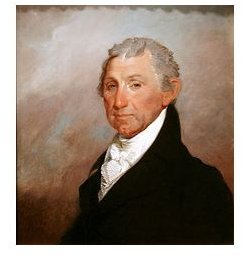
The Monroe Doctrine was introduced on December 2, 1823. It was first stated by President James Monroe when he spoke to Congress. The success of the Monroe Doctrine is debated even today.
Principles of the Monroe Doctrine
When President Monroe spoke to Congress in December 1823, he outlined four main principles to help keep European countries and Russia out of the Western hemisphere. The United States did not want countries such as France and Spain to continue to colonize land in the Americas. The area that was particularly targeted were the Latin American states that had recently gained independence from Spain.
The four principles President Monroe discussed that day were:
- If European countries interfered in Western Hemisphere affairs or attempted to colonize more land in the Americas, the United States would regard this behavior as aggressive and a security threat. The United States would have to act to combat these aggressive acts.
- In return, the United States promised not to interfere with the European colonies already in the New World (Western Hemisphere), and they would not enter into any European wars unless Americans were threatened.
- No more colonization was open to European countries in the Western Hemisphere.
- European countries and the United States had different political systems.
Effects of the Monroe Doctrine
This policy had both positive and negative effects on European countries and the United States in the early 1820s.
At first, the United States did not have the military to back up the principles of the Monroe Doctrine. But Great Britain agreed with the doctrine because they wanted to trade with states in Latin America, and the Royal Navy (from Great Britain) helped to enforce the doctrine. Britain didn’t want Spain or France to colonize any more of the Western Hemisphere or control trade in the colonies. They were especially worried about the Latin American states going back under Spanish rule. If this happened, Spain would cut off Britain’s ability to trade in these markets.
In 1836, Great Britain had an alliance with the Republic of Texas, when Texas declared itself independent from Mexico. The alliance was not upheld because American officials insisted it went against the Monroe Doctrine.
Some Latin American states saw the United States as becoming a meddling bully because of the Monroe Doctrine. However, the United States helped many of the countries such as Argentina, Chile, Haiti, and Cuba solve internal disputes.
Many presidents and government leaders used the Monroe Doctrine as the basis for foreign policy. For example, President Tyler told Britain to stay away from Hawaii in 1842 and began steps to make it a U.S. annex. He based these actions on the Monroe Doctrine. In 1868, President Andrew Johnson used the foreign policy to start the annexing of Alaska, so Russia would not claim it.