Explore engaging fine motor skill activities for preschoolers using recycled materials that promote creativity, coordination, and early learning in an eco-friendly way.
Developing fine motor skills in preschoolers is essential for their overall growth, supporting tasks like writing, buttoning, and using scissors. Using recycled materials for fine motor activities not only nurtures these skills but also encourages environmental awareness and creativity. These activities can be adapted to various classroom or homeschooling settings, making them versatile and budget-friendly options for educators and parents alike.
Why Focus on Fine Motor Skills in Preschool?
Fine motor skills involve the coordination of small muscles in the hands and fingers with the eyes. Strengthening these skills helps children gain independence in daily activities and prepares them for academic tasks such as handwriting and manipulating classroom tools. Introducing these skills early through playful, hands-on activities fosters confidence and engagement, setting a foundation for lifelong learning.
Benefits of Using Recycled Materials
Utilizing recycled materials for fine motor activities is a sustainable approach that sparks creativity while teaching children about reusing and repurposing everyday objects. Common items like bottle caps, cardboard, and fabric scraps can be transformed into stimulating tools that challenge children’s dexterity and problem-solving abilities. This approach also reduces costs and waste, making it accessible for all classroom environments.
Activity 1: Bottle Cap Sorting and Stacking
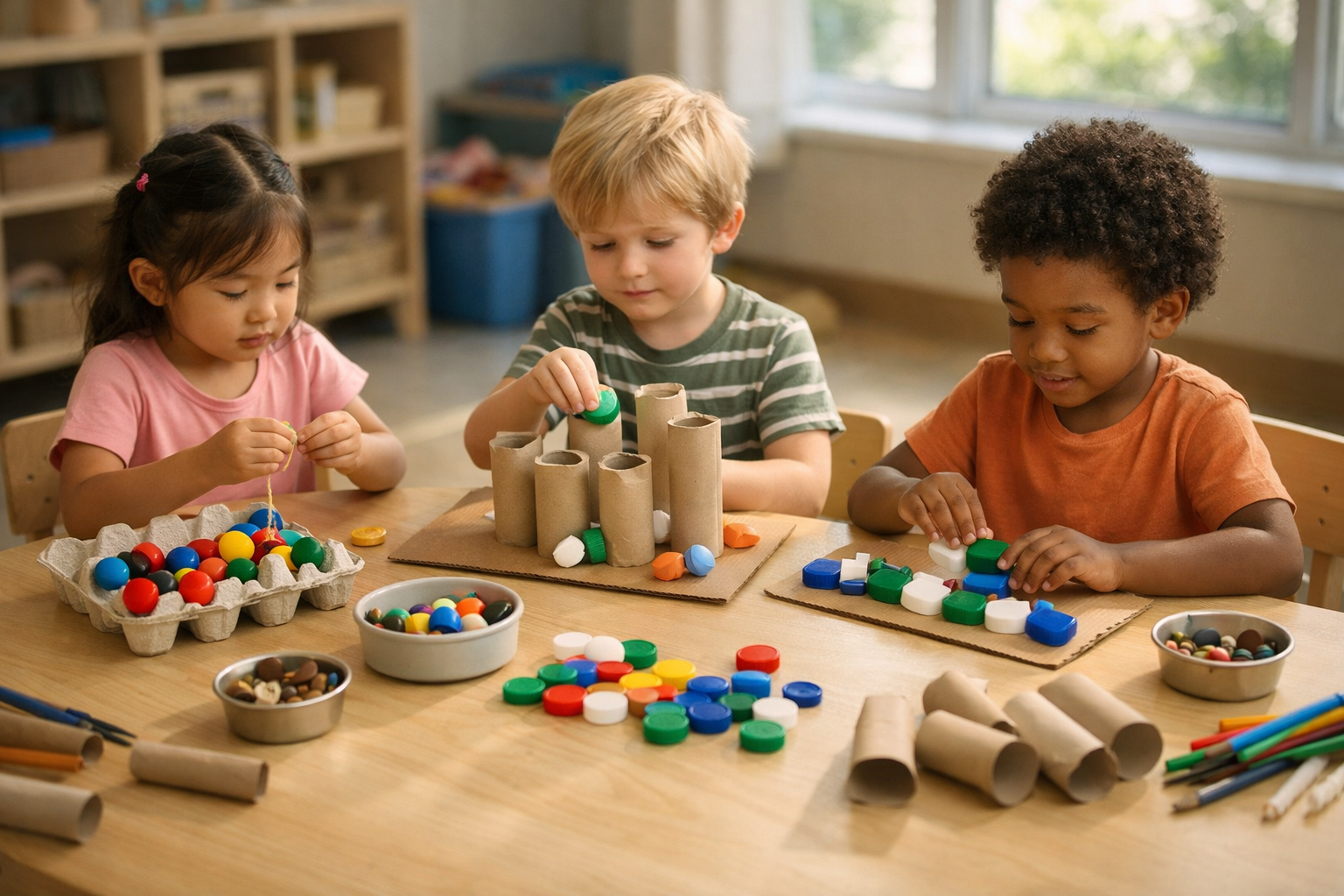
Collect various colored plastic bottle caps and ask children to sort them by color or size. This simple sorting activity encourages hand-eye coordination and cognitive skills such as categorization. Once sorted, children can stack the caps to build towers, which requires careful finger control and balance. Adjust the difficulty by introducing tweezers or small tongs for picking up the caps to further develop pincer grasp.
Activity 2: Cardboard Tube Threading
Save empty cardboard tubes from paper towels or toilet paper rolls. Cut several small holes near one end of each tube. Provide children with yarn, shoelaces, or strips of fabric to thread through the holes. This threading activity promotes bilateral coordination and finger dexterity. To make it more engaging, children can create patterns or use different colors of yarn.
Activity 3: Egg Carton Caterpillar
Use an empty egg carton to create a caterpillar craft. Cut the carton into segments of two or three cups. Children can paint or decorate each segment and then connect them using pipe cleaners threaded through small holes punched on the sides. Manipulating the pipe cleaners and decorating the segments requires precise finger movements and encourages creativity.
Activity 4: Paper Clip Chains
Provide children with paper clips and challenge them to link them into chains. This activity strengthens finger muscles and improves hand strength. For added complexity, children can sort paper clips by color or size before linking them. Always supervise to ensure safety, especially with younger children who might put small items in their mouths.
Activity 5: Button Matching Game
Collect buttons of various sizes, shapes, and colors. Create a matching board by gluing buttons onto a sturdy piece of cardboard in a specific arrangement. Children can then find matching buttons from a pile and place them on the board. This matching and placement activity requires careful hand movements and enhances visual discrimination skills.
Tips for Adapting Activities
Each child develops at their own pace, so it’s important to adapt activities to meet individual needs. For children who are just beginning to develop fine motor skills, simplify tasks by reducing the number of pieces or providing larger materials. For more advanced learners, increase complexity by introducing smaller items, timed challenges, or combining multiple skills in one activity. Always ensure materials are safe and appropriate for the child’s age.
Encouraging Consistent Practice
Consistency is key when developing fine motor skills. Incorporate these activities into daily routines or learning centers to provide regular practice. Encourage children to verbalize their actions or describe what they are doing to integrate language development with motor skills. Celebrating small achievements can motivate children to continue practicing and improving.
Using recycled materials for fine motor skill activities offers a practical, eco-conscious way to support preschoolers’ development. These hands-on projects foster creativity, coordination, and problem-solving, making learning enjoyable and meaningful. By adapting activities to suit individual needs and providing consistent opportunities for practice, educators and parents can help children build the skills they need for success in school and everyday life.