Explore practical homeschool portfolio ideas to create a meaningful year-end review that showcases student growth, organizes learning evidence, and supports future planning.
Creating a homeschool portfolio is a valuable way to document your child’s learning journey throughout the year. Beyond simply collecting work samples, a well-organized portfolio can provide meaningful insights during year-end reviews and help plan for the next steps. This article offers practical ideas for building a homeschool portfolio that supports reflection, assessment, and celebration of student progress.
Understanding the Purpose of a Homeschool Portfolio
Before assembling a portfolio, it’s helpful to clarify its purpose. Portfolios serve multiple functions: they collect evidence of learning, track academic progress, and provide a basis for discussion during reviews. They can also motivate students by showcasing achievements and helping them take ownership of their education. Consider your state’s homeschooling requirements and your family’s goals when deciding what to include.
Selecting Work Samples Thoughtfully
Not every worksheet or project needs to be saved. Choose samples that highlight a variety of skills and subjects, showing growth over time. For example, include early and later writing assignments to illustrate improvement in composition or handwriting. Incorporate completed math problems, science experiments, art pieces, and reading logs. Select samples that reflect your child’s interests and challenges to provide a well-rounded picture.
Organizing the Portfolio for Easy Review
Structure the portfolio in a way that makes review straightforward. You might organize by subject, by month, or by type of work (e.g., writing, math, science). Using clear dividers or labeled folders can help keep materials accessible. For digital portfolios, consistent file naming and folders aid navigation. An organized portfolio not only saves time during year-end review but also helps students and parents quickly find examples to discuss.
Including Reflective Components
Reflection is a powerful learning tool. Encourage your child to write or verbally express thoughts about their work and progress. Include self-assessments, goal-setting sheets, or journals that accompany the work samples. This personal perspective enriches the portfolio by showing not just what was done but how the student feels about their learning and what they want to improve.
Incorporating Visual and Creative Elements
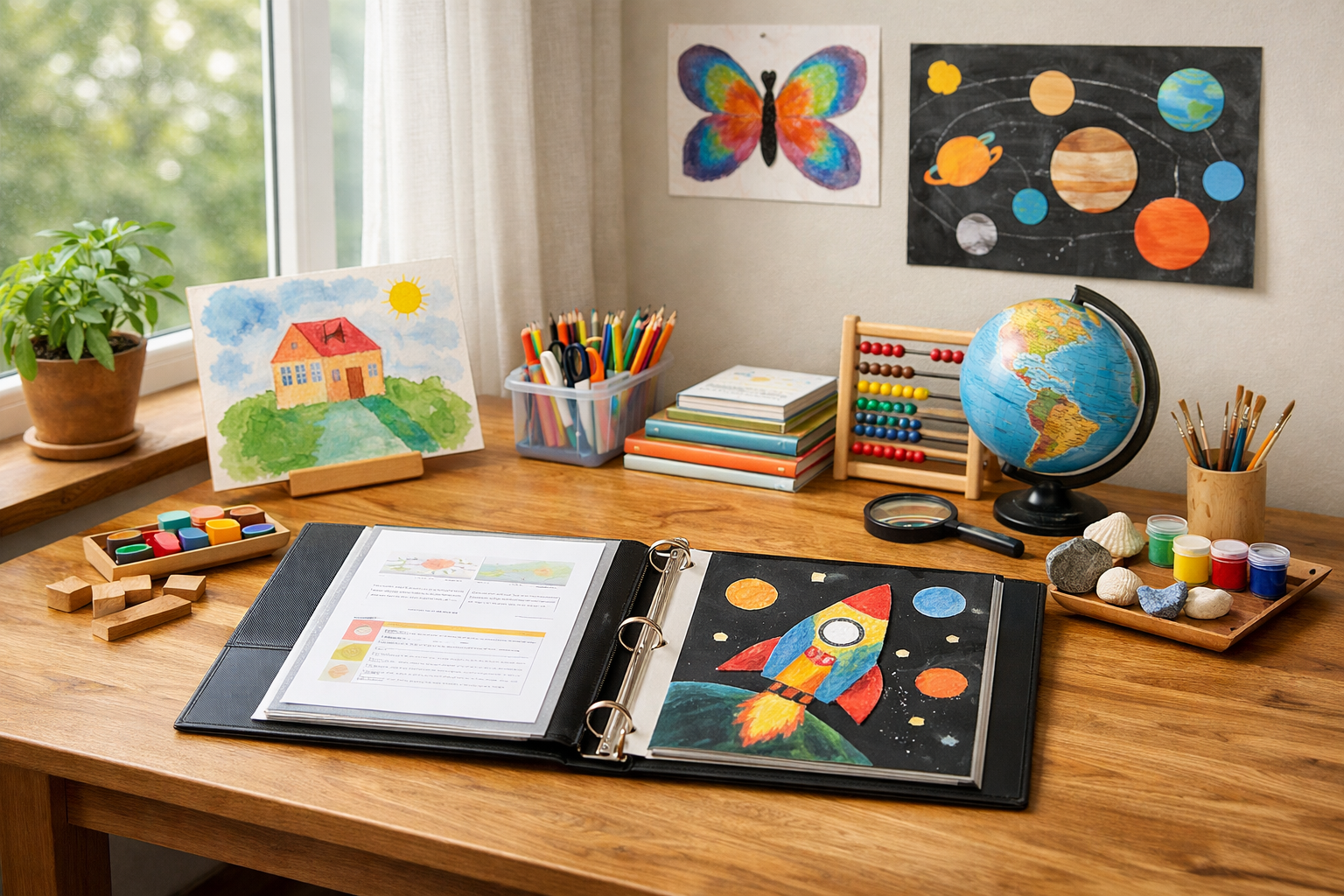
Visuals can enhance the portfolio’s appeal and depth. Photographs of hands-on activities, science experiments, or field trips add context to written work. Artwork, models, or multimedia projects demonstrate creativity and application of knowledge. Including these elements makes the portfolio more engaging and showcases diverse learning styles.
Using Checklists and Progress Charts
Checklists and progress charts help track completed assignments and skill mastery over time. These tools provide a quick overview of accomplishments and identify areas needing attention. For example, a reading log that tracks books read or a math skills checklist can make assessment more objective. These records support discussions during the year-end review by providing concrete data.
Creating a Digital Portfolio Option
Digital portfolios offer flexibility and ease of sharing. Scanning or photographing work samples allows for storage without physical clutter. Many platforms enable adding comments, reflections, and multimedia. Digital portfolios are especially useful if you need to submit documentation to a school or state agency. Remember to back up files regularly and keep privacy considerations in mind.
Planning the Year-End Review Meeting
A homeschool portfolio is most effective when paired with a thoughtful review meeting. Schedule a time to sit down with your child and discuss the portfolio contents. Celebrate successes and identify goals for the upcoming year. Use the portfolio as a visual aid to guide the conversation. This review is an opportunity to adjust curriculum choices and teaching approaches based on observed strengths and challenges.
Adapting Portfolios for Different Age Groups
Portfolios should be tailored to the student’s age and developmental level. Younger children might benefit from more visual elements and parental notes explaining their work. Older students can take greater responsibility for selecting samples and writing reflections. Adjust the portfolio’s complexity and format to match your child’s abilities and comfort with self-assessment.
Maintaining Portfolios Throughout the Year
Rather than compiling the portfolio all at once at year-end, maintain it consistently. Set aside time weekly or monthly to add new work samples and reflections. This ongoing process prevents last-minute scrambling and provides a more accurate record of learning. Regular maintenance also encourages students to engage with their progress continuously.
Using Portfolios to Support Transitions
Portfolios are helpful when transitioning between grade levels, schools, or even homeschooling methods. They provide a comprehensive snapshot of what the student has learned and can inform new educators or programs. Keeping detailed portfolios ensures continuity and helps avoid unnecessary repetition or gaps in instruction.
Balancing Portfolio Depth and Manageability
While a thorough portfolio is beneficial, it’s important to avoid becoming overwhelmed. Be selective about what to include and focus on quality over quantity. The goal is to create a useful tool for reflection and planning, not a burdensome collection. Streamline the process by establishing clear criteria for portfolio contents and sticking to them.
Homeschool portfolios are a versatile resource that, when thoughtfully created and maintained, can enrich the educational experience for both students and parents. By organizing work samples, incorporating reflections, and preparing for meaningful year-end reviews, you build a valuable record of learning that supports growth and future success.