This article offers practical strategies for incorporating primary sources into short history lessons to enhance student engagement, critical thinking, and understanding of historical events.
Understanding Primary Sources and Their Importance
Primary sources are original documents or artifacts created during the time under study. Examples include letters, photographs, speeches, newspapers, diaries, and official records. Using these sources in history lessons allows students to connect directly with the past, gaining insights that secondary sources might not provide. They encourage critical thinking by prompting students to analyze, question, and interpret evidence rather than passively receiving information.
Selecting Primary Sources for Short Lessons
When time is limited, choosing the right primary source is crucial. Look for materials that are concise but rich in content. For example, a single political cartoon from the Civil Rights Movement or a brief excerpt from a founding document like the Declaration of Independence can be effective. Avoid overly complex or lengthy sources that require extensive background explanation. Instead, pick sources that are accessible to your students’ reading levels and relevant to the lesson’s objective.
Preparing Students for Analysis
Before diving into the primary source, provide context. Briefly explain the historical background, the creator of the source, and its intended audience. For instance, if using a World War II propaganda poster, explain why governments used posters to influence public opinion. This sets the stage for students to analyze the source’s purpose and perspective. Encourage students to consider who created the source, why, and what message it conveys.
Guiding Questions to Foster Critical Thinking
Use targeted questions to help students examine the primary source thoughtfully. For example:
- What type of source is this (letter, photograph, speech)?
- Who created it, and what might their perspective be?
- What is the main message or purpose?
- What emotions or reactions does it evoke?
- Are there any biases or underlying assumptions?
These questions encourage students to think beyond surface details and develop analytical skills. For a short lesson, select two or three questions that align with your learning goals.
Incorporating Group Activities
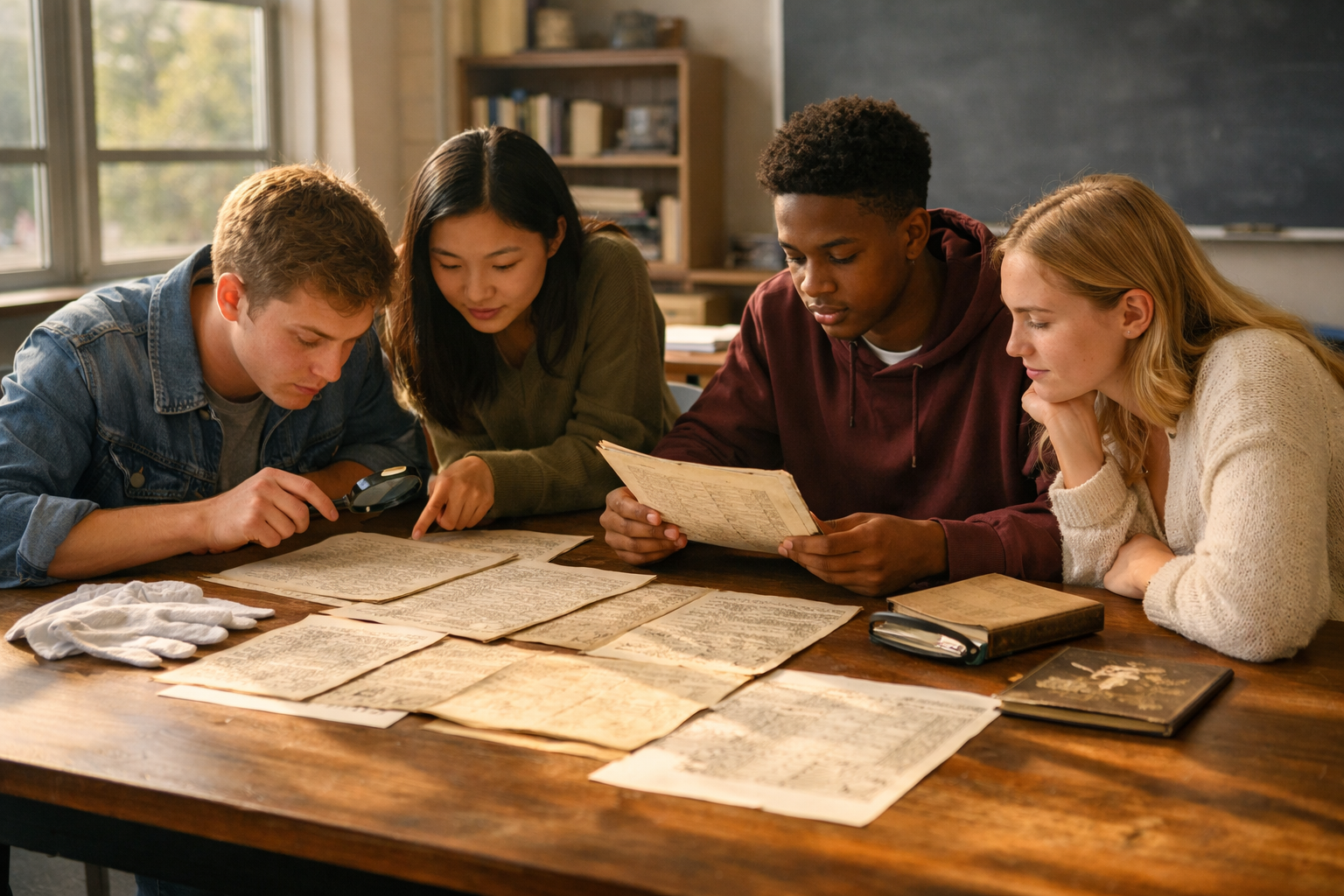
To maximize engagement in a brief lesson, consider small group discussions. Assign each group a different primary source or a different question to explore. Groups can then share their insights with the class, fostering a collaborative learning environment. For example, when studying the American Revolution, one group might analyze a soldier’s diary entry while another examines a political pamphlet. This variety enriches understanding and keeps students actively involved.
Adapting for Different Grade Levels
Younger students may benefit from visual primary sources like photographs or political cartoons, which can be easier to interpret. Older students can handle more complex texts, such as speeches or legislative documents. Adjust the depth of analysis and the complexity of questions based on your students’ abilities. For example, elementary students might focus on describing what they see and how it makes them feel, while high school students might evaluate the source’s reliability and bias.
Using Technology to Access Primary Sources
Many online archives and libraries offer digitized primary sources suitable for classroom use. Websites like the Library of Congress, National Archives, and Smithsonian provide searchable collections. Using digital tools allows quick access to diverse materials and can save time during lesson preparation. You can project images or texts on a screen, or distribute printed copies for close reading. However, always preview sources to ensure they are appropriate and relevant.
Practical Example: A Short Lesson on the Emancipation Proclamation
Start with a brief overview of the Civil War and President Lincoln’s role. Then, provide students with a short excerpt from the Emancipation Proclamation. Guide them through questions such as: Who issued this document? What was its purpose? How might different groups at the time have reacted? Follow with a quick discussion on the document’s impact. This approach fits well into a single class period and demonstrates how primary sources illuminate historical events.
Balancing Time and Depth
Since time is limited in short history lessons, it’s important to balance depth with efficiency. Focus on one or two key sources rather than overwhelming students with too many materials. Prioritize interactive elements like discussion or brief writing responses to reinforce learning. For example, after analyzing a primary source, students might write a short paragraph expressing their interpretation or how the source changed their understanding of the topic.
Supporting Diverse Learners
Different students may need varied supports to engage with primary sources effectively. For English language learners or students with reading challenges, consider providing summaries, glossaries, or guided notes. Visual aids and graphic organizers can help break down information. Encouraging peer collaboration also allows students to learn from each other. Adapt your approach based on your classroom’s unique needs to ensure all students benefit from analyzing primary sources.
Conclusion
Incorporating primary sources into short history lessons enriches students’ learning by offering authentic perspectives from the past. By carefully selecting accessible materials, providing context, guiding thoughtful analysis, and adapting to diverse learners, teachers can make these lessons both manageable and meaningful. Even brief explorations of primary sources can spark curiosity and deepen understanding, helping students develop essential historical thinking skills that extend beyond the classroom.