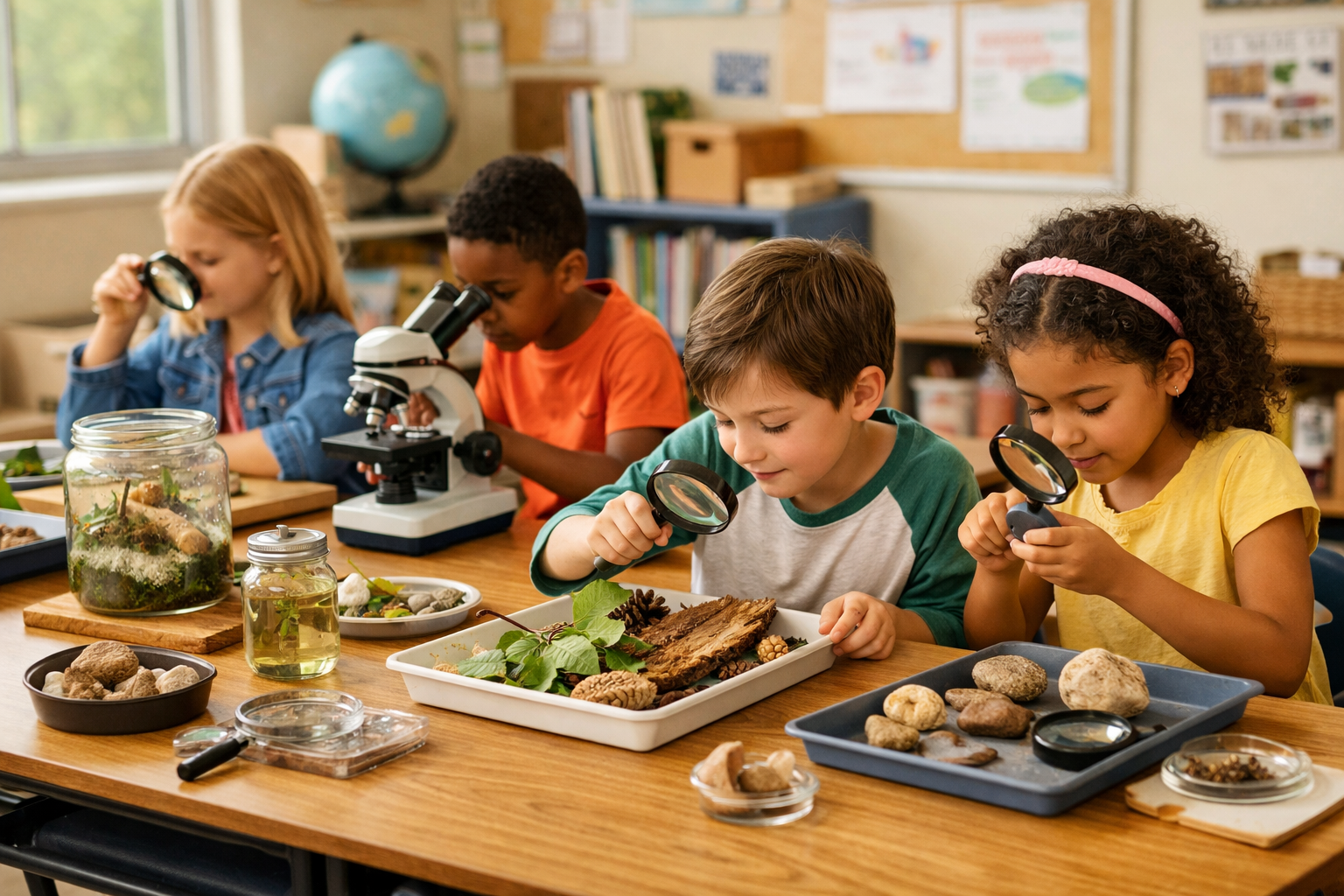
This article offers practical, low-prep science observation stations designed for upper elementary classrooms to engage students in hands-on learning with minimal setup and flexible adaptation options.
Benefits of Science Observation Stations in Upper Elementary
Science observation stations encourage curiosity and critical thinking by allowing students to explore scientific concepts through direct interaction and observation. For upper elementary students, these stations promote inquiry skills, support differentiated learning, and foster independence. By setting up multiple stations, teachers can address diverse interests and learning styles, while maintaining manageable classroom routines. These stations also offer opportunities for repeated observations over time, helping students develop patience and scientific documentation skills.
Choosing Low-Prep Materials and Themes
Selecting materials for observation stations that require minimal preparation saves valuable classroom time and resources. Everyday items such as leaves, rocks, magnifying glasses, and simple plant cuttings are excellent choices. Themes can focus on living or nonliving things, physical properties, or natural phenomena. For example, a station might feature different types of seeds, a water cycle model with condensation and evaporation demonstrations, or simple machines made from household objects. Teachers should consider the interests and developmental levels of their students when choosing themes.
Station 1: Leaf and Plant Exploration
This station invites students to examine various leaves and plant parts using magnifying glasses or hand lenses. Provide a collection of leaves with different shapes, sizes, and textures along with simple identification cards. Students can observe vein patterns, edges, and colors, noting similarities and differences. Encourage them to sketch what they see and write descriptive words. This activity supports lessons on plant biology, adaptation, and biodiversity, and it requires only a small collection of natural materials and basic observation tools.
Station 2: Rock and Mineral Observation
Set up a station with a selection of common rocks and minerals for students to inspect. Include a few simple tools like a streak plate, a small hammer (if safe and supervised), and hand lenses. Students can observe color, texture, hardness, and luster, recording their findings in a science journal. This station can be linked to discussions about earth science and natural resources. Using found or donated rocks keeps preparation minimal while providing tactile learning experiences.
Station 3: Water and Surface Tension Experiments
This station allows students to explore water properties with simple experiments. Materials include clear containers, water, paper clips, dish soap, and pepper. Students can test how water holds paper clips on its surface or how soap affects pepper’s movement, illustrating surface tension. These hands-on activities require no advance preparation beyond gathering common household items. Students learn to make predictions, observe outcomes, and discuss results, reinforcing scientific thinking.
Station 4: Simple Machines in Action
Introduce basic mechanical concepts using everyday objects like pulleys made from string and spools, inclined planes from notebooks or boards, and levers from rulers and erasers. Students can manipulate these tools to observe how force changes with different setups. This station encourages problem-solving and connects science to engineering. Materials are easy to gather and set up quickly, making this a low-prep yet highly engaging station.
Incorporating Student Documentation and Reflection
Encourage students to document their observations using notebooks, worksheets, or digital tools if available. Providing structured templates with prompts helps guide their thinking and makes reflection easier. Questions like “What do you notice?”, “What surprised you?”, and “How does this relate to what you know?” support deeper understanding. Reflection time at the end of station rotations allows students to share discoveries and discuss questions, fostering communication skills and reinforcing learning.
Adapting Stations for Diverse Learners
Science observation stations can be tailored to meet varied learning needs. For students who benefit from visual supports, include labeled images or diagrams. For those needing more challenge, add extension questions or encourage independent research. Grouping students heterogeneously promotes peer learning and social skills. Teachers should continuously monitor engagement and adjust materials or instructions to ensure accessibility and inclusiveness, aligning with classroom goals and standards.
Tips for Managing and Rotating Stations
To maintain a smooth workflow, clearly label each station and provide simple instructions. Limit the number of students per station to reduce crowding and maximize engagement. Rotating stations every 15 to 20 minutes keeps energy high and allows exposure to multiple concepts. Prepare materials in advance and store them in easy-to-transport containers. Regularly inspect and replenish supplies to keep stations inviting and functional.
Using low-prep science observation stations offers a flexible and effective way to engage upper elementary students in hands-on learning. By selecting accessible materials and varied themes, teachers can create enriching experiences that promote scientific inquiry without extensive preparation. Thoughtful documentation and reflection encourage deeper understanding, while adaptations ensure all students benefit. With manageable setup and clear management strategies, these stations can become a valuable part of any science curriculum.