Assigning classroom jobs that foster student responsibility without adding teacher workload encourages independence, builds essential skills, and supports a smoothly run learning environment.
Creating a classroom environment where students take ownership of their space and routines promotes responsibility and independence. Classroom jobs are a proven way to encourage this development, but teachers often worry about adding more tasks to their already busy schedules. Fortunately, many classroom jobs can be structured to build responsibility without creating extra work for the teacher. This article explores practical classroom jobs that empower students while keeping teacher workload manageable.
Benefits of Classroom Jobs
Classroom jobs help students develop a sense of belonging and accountability. When students know they have a role, they feel valued and contribute to the community. These roles foster essential life skills such as organization, time management, and cooperation. Additionally, assigning jobs can reduce disruptions by encouraging students to focus on collective responsibilities.
From a teacher’s perspective, well-planned classroom jobs can streamline daily routines and reduce repetitive tasks. When students take responsibility for certain tasks, teachers can focus more on instruction and less on managing logistics. The key is choosing jobs that integrate seamlessly into classroom flow without requiring constant oversight.
Selecting Jobs That Require Minimal Teacher Oversight
To avoid adding extra work, choose jobs that students can perform independently or with minimal guidance. Jobs like passing out materials, organizing supplies, or managing classroom recycling bins typically do not require teacher intervention once expectations are clear. Consider the age and maturity of your students when assigning jobs, as younger students may need more support initially.
Clearly defined roles with simple instructions help students succeed and reduce confusion. Visual job charts or checklists can assist students in remembering their duties and completing them correctly. Rotating jobs on a regular schedule also keeps students engaged and provides equitable opportunities to build responsibility.
Examples of Low-Maintenance Classroom Jobs
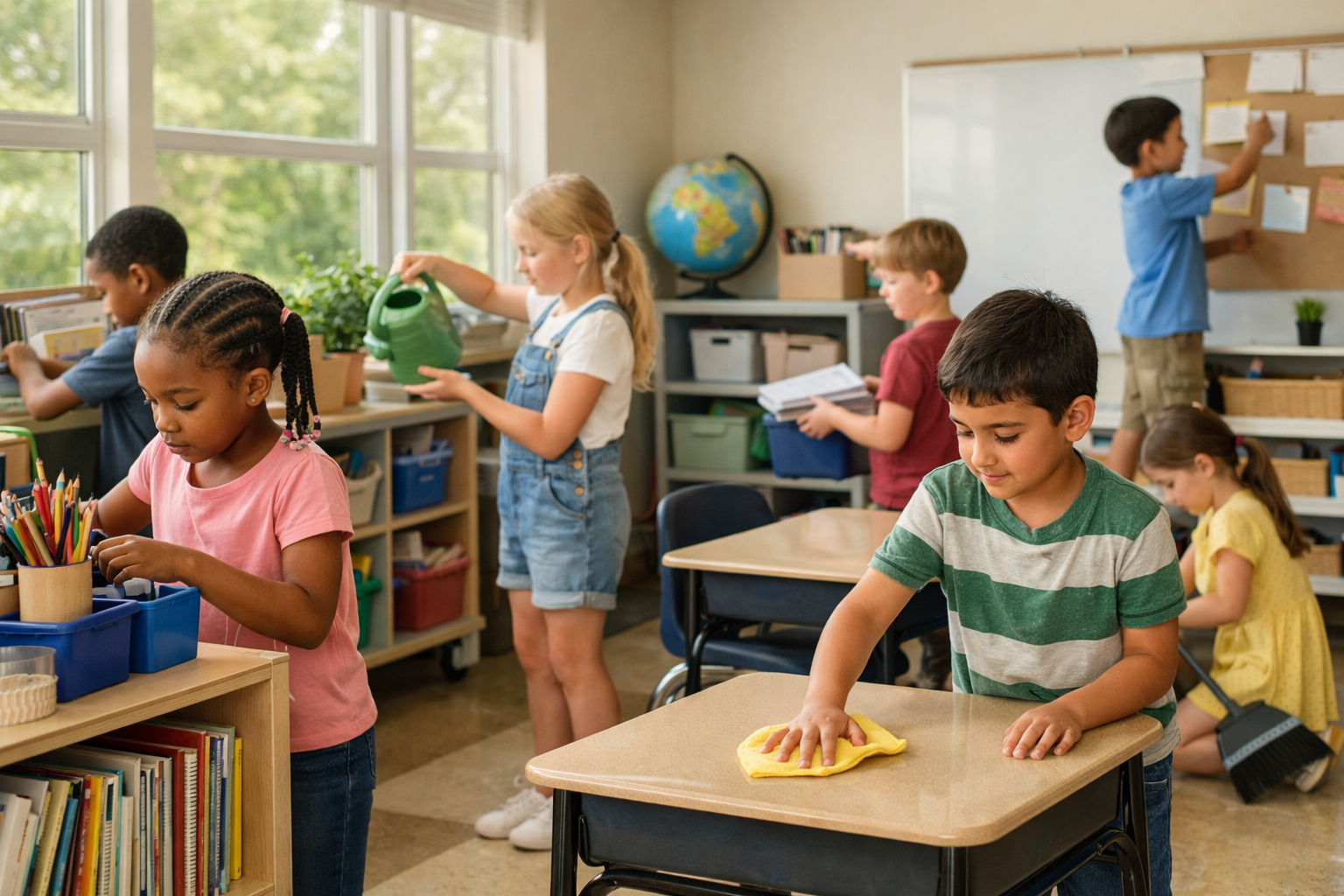
Here are some practical classroom jobs that build responsibility without demanding much extra work from teachers:
- Line Leader: Guides the class when moving between locations, encouraging orderliness.
- Materials Manager: Hands out and collects supplies during activities.
- Tech Assistant: Powers on devices or helps with simple troubleshooting.
- Recycling Monitor: Ensures recycling bins are used properly and empties them when full.
- Homework Collector: Gathers completed assignments at the start of the day.
- Desk Inspector: Checks desks for cleanliness and organization weekly.
Each job reinforces responsibility and can be completed with minimal teacher involvement once students understand the expectations.
Incorporating Student Voice in Job Assignments
Involving students in selecting or rotating jobs increases their investment in the process. Teachers might hold brief discussions or surveys to learn which roles students feel confident handling. When students choose their jobs, they are more likely to take ownership and perform tasks diligently.
Adjusting jobs based on student feedback also helps match responsibilities to individual strengths and developmental levels. This flexibility ensures that jobs remain meaningful and manageable for all students.
Using Technology to Simplify Job Management
Technology tools can facilitate job rotations and reminders, reducing the teacher’s organizational burden. Apps or simple digital timers can signal job changes or prompt students to complete tasks. Digital job charts displayed on classroom screens or shared through learning management systems keep students informed.
Such tools help maintain consistency and clarity without requiring the teacher to manually track each rotation or remind students repeatedly.
Teaching Responsibility Through Reflection
Periodic reflection on job experiences helps deepen student learning. Teachers can set aside a few minutes weekly for students to discuss what went well and what challenges they faced. This practice encourages self-awareness and problem-solving skills.
Reflection activities can be as simple as a quick classroom conversation, journal entries, or paired discussions. These moments support growth and reinforce the value of responsibility beyond completing a task.
Adapting Jobs for Different Grade Levels
While the core idea of classroom jobs applies across grade levels, the complexity and independence expected will vary. Younger students may need more guidance and simpler tasks, while older students can handle more complex or leadership-oriented roles.
Teachers should tailor job descriptions and supports to fit their specific classroom context. For example, a kindergartener might help by putting away crayons, whereas a middle school student might manage a classroom calendar or lead a peer tutoring group.
Conclusion
Integrating classroom jobs that build responsibility without creating extra work for teachers is achievable with thoughtful planning. Selecting age-appropriate, clearly defined roles that students can perform independently benefits both students and teachers. Incorporating student choice, using technology aids, and encouraging reflection further enhance the effectiveness of classroom jobs.
By fostering a culture of shared responsibility, teachers create a positive environment where students learn valuable skills that extend beyond academics. This approach supports classroom management while promoting student growth and engagement in meaningful ways.